Region one
Speyside
The smallest of the five regions by area and the largest by almost every other measure. It is also the only region that is legally inside another one, which is a good indication of how tidy this map is.
Where Speyside is, legally
The Scotch Whisky Regulations 2009 draw Speyside around the Spey and the parishes of Moray and adjoining ground, and they place that outline inside the wider Highland region. The practical consequence is that a distillery entitled to call itself Speyside may also call itself Highland, and several do, usually for reasons of house tradition or because a portfolio already contains a Speyside. The reverse is not true: a Highland distillery outside the boundary cannot borrow the Speyside name.
So the first thing to take from the word on a label is administrative rather than sensory. It tells you the spirit was made in the most concentrated distilling district in Scotland, where the neighbouring warehouse is rarely more than a few miles away and staff, coopers and engineers have moved between sites for generations.
Why so many distilleries ended up here
Four ordinary advantages stacked up. Barley grew well on the low, comparatively dry ground of the Laich of Moray. Water came off granite and through peat in quantity. Fuel — peat first, then coal, then coal brought in cheaply by rail — was available. And the Strathspey railway gave the valley a route to the blending houses of the central belt at exactly the moment those houses needed volume.
The Excise Act of 1823 made licensed distilling commercially sensible at a scale that smuggling never could, and The Glenlivet is the distillery most often cited as the early beneficiary. The late nineteenth-century blending boom did the rest: Glenfiddich, Glen Grant, Cragganmore, Craigellachie, Balvenie, Aberlour, Mortlach and Glenfarclas all sit within a short drive of one another, and most of them were built or expanded to feed blends rather than to sell single malt.
House character is decided before the cask
The cheerful stereotype says Speyside means light, sweet and fruity. That describes a great deal of the region's output and misses the rest of it entirely. The variables that set character in the still house are the same everywhere; Speyside simply contains an unusually wide spread of settings.
- Fermentation length. Longer fermentations in the washback push the wash towards fruity, estery flavours. Shorter ones leave a nuttier, more cereal-driven base.
- Still size and shape. Tall, narrow stills with long necks give vapour more chance to fall back and re-distil — more copper contact, lighter spirit. Squat stills do the opposite. The Macallan's small, squat spirit stills are the standard example of the heavier approach.
- Condenser type. Most distilleries use shell-and-tube condensers. Cragganmore and Mortlach use worm tubs — a coiled copper pipe in a tub of cold water — which reduce copper contact and give a heavier, meatier spirit.
- Distillation regime. Mortlach's partial third distillation is the region's best-known deviation from the standard two runs. Glen Grant's purifiers, small chambers that send heavier vapour back into the still, push the other way and produce a notably light spirit.
- Direct firing. Glenfarclas still uses direct-fired wash stills rather than internal steam coils, which creates hot spots and a degree of caramelisation that indirect heating does not.
- Peat. Speyside is not an unpeated region by rule. Benriach has a long history of peated production alongside its unpeated make, and floor maltings survive at Balvenie for part of its requirement.
Cask policy: the other half of the argument
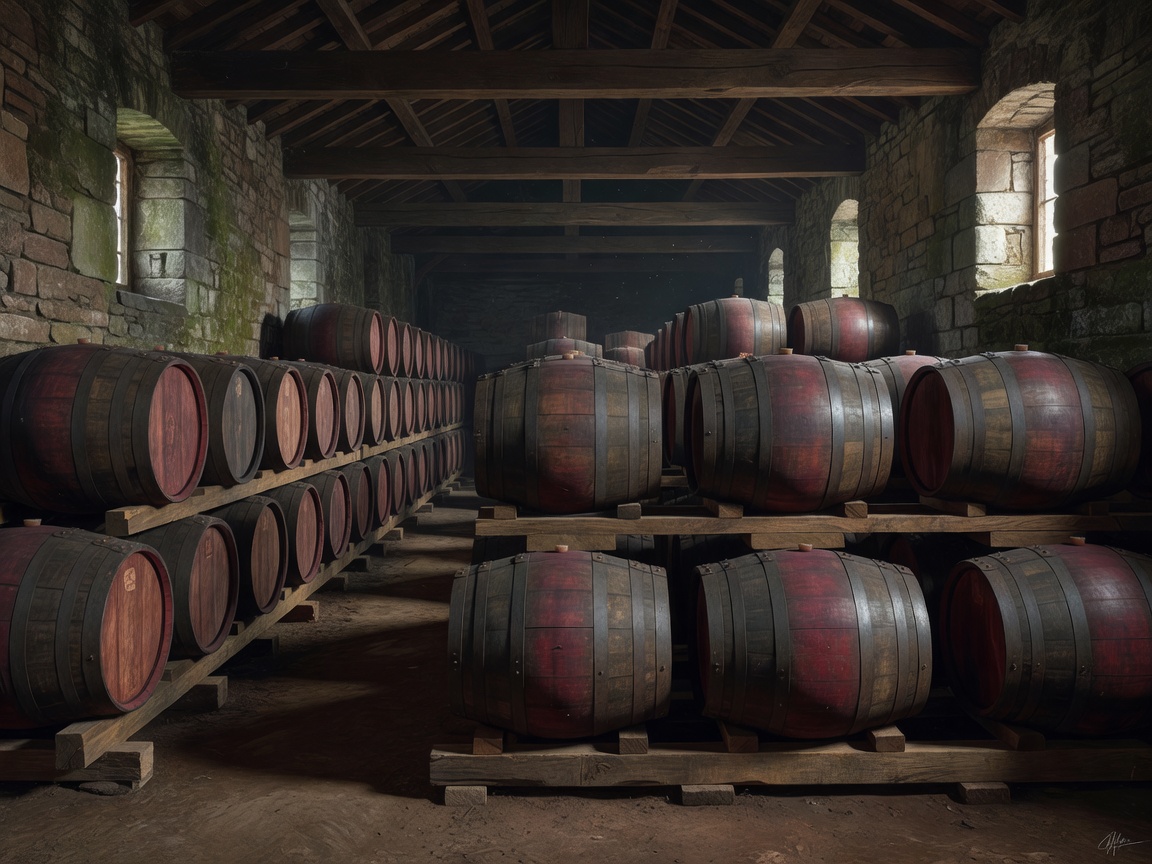
Two broad supply lines dominate. Ex-bourbon American oak arrives as barrels of roughly 200 litres, often rebuilt into hogsheads of around 250 litres; it tends to give vanilla, coconut and soft orchard-fruit characters. Sherry-seasoned European oak arrives as butts of roughly 500 litres, seasoned with oloroso or Pedro Ximénez at bodegas in Jerez before shipping; it tends to give dried fruit, spice, tannin and colour. The legal ceiling on any cask used for Scotch is 700 litres.
Sherry-seasoned wood is the more expensive and the more supply-constrained of the two, which is why it is so often reserved for older or premium bottlings and why "first fill" appears on labels as a selling point. A first-fill cask is the first to hold Scotch after its previous contents; refill casks, used a second or third time, give less wood influence and let distillate character show. Neither is better. A delicate spirit in an aggressive first-fill butt can be flattened, and a robust spirit in a tired refill can sit in the warehouse for a decade achieving very little.
Finishing — moving whisky into a second cask type for a final period — is widely practised and permitted within the rules, and the label will normally name the finishing cask. Plain caramel colouring is also permitted, which is why some producers advertise natural colour as a point of difference.
Reading a Speyside label without over-reading it
Check four things in order: the category (single malt, blended malt, single grain), the age statement if there is one, the strength, and any cask description. An age statement always refers to the youngest whisky present. A bottling without one is not automatically young, but it is telling you less. Cask-strength bottlings vary between batches by design. And "matured in sherry casks" covers everything from a full-term butt to a short finish, so the more precise the wording, the more you can rely on it.
Comparing usefully
A structural way to taste the region
If you want to understand Speyside rather than collect it, compare along one variable at a time: the same distillery in refill American oak and in first-fill sherry-seasoned oak; a worm-tub make such as Cragganmore against a purifier-lightened make such as Glen Grant; a young cask-strength bottling against an older diluted one. Holding everything else steady is the only way the differences stop being folklore.