Region two
Islay
An island with its own statutory locality, a reputation built almost entirely on one production decision, and several distilleries quietly declining to make that decision.
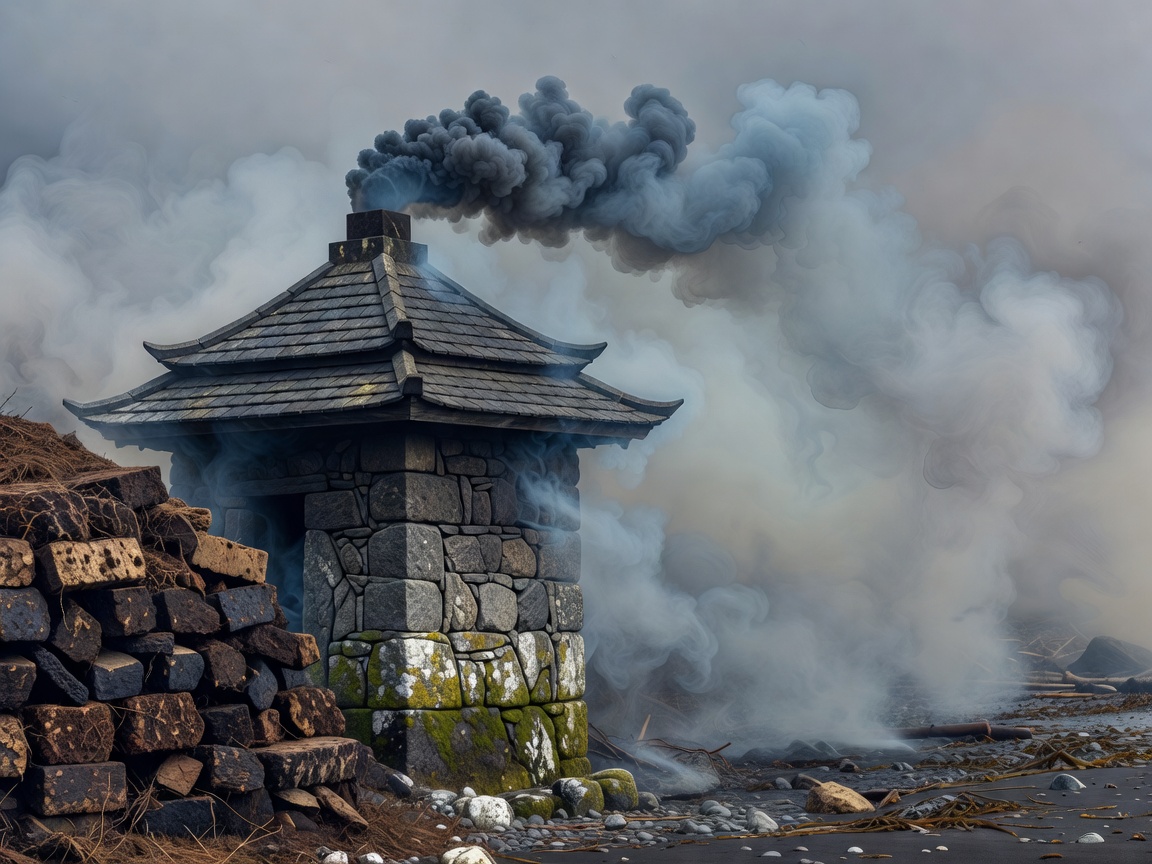
Peat is a fuel decision, not a terroir mystery
Malted barley has to be dried before it is milled. If the kiln burns peat during part of that drying, phenolic compounds in the smoke settle onto the damp grain and survive mashing, fermentation and distillation in reduced quantities. That is the whole mechanism. Islay whisky tastes of smoke because Islay maltsters burn peat under the malt, not because the island air is doing something poetic to the casks.
Peat levels are specified in phenol parts per million, measured on the malt rather than on the finished spirit. Distilleries order malt to a spec, which is why one company can produce peated and unpeated whisky in the same still house in different weeks. A great deal of the phenol content is lost between malt and bottle, so a malt figure quoted on a label tells you the intention rather than what reaches your glass.
Where Islay malt comes from
Most of the island's distilleries buy malt from the maltings at Port Ellen, which can produce to different peating specifications for different customers. A handful also run their own floor maltings for part of their requirement — Laphroaig, Bowmore and Kilchoman are the usual examples, Kilchoman being a farm distillery that grows barley on site as well. Floor malting is labour-intensive and rarely covers a distillery's full need, so "we malt our own" almost always means "we malt some of our own".
The distinction matters more than it sounds. Malt from a commercial maltings is consistent to a target. Malt turned by hand on a stone floor and kilned in a small pagoda-roofed kiln varies more, and the distilleries that keep the practice generally value that variation, or at least value being able to talk about it.
The peated houses, and the ones that are not
The island's heavily peated names are the ones the region is known for: Ardbeg, Lagavulin, Laphroaig and Caol Ila on the south and east coasts, with Bowmore sitting in the middle of the peating range at Loch Indaal. Kilchoman, on the western side, produces peated spirit from a small operation with its own barley fields.
Then there are the exceptions that quietly dismantle the stereotype. Bunnahabhain has long been known for a largely unpeated core, with peated releases alongside it. Bruichladdich runs three distinct lines under one roof: an unpeated principal malt, the peated Port Charlotte, and Octomore, released at phenol specifications well above the island's usual range and printed on the box for anyone who cares to check. Ardnahoe is the island's most recent addition, built on the northeast coast with worm-tub condensers.
What else Islay does differently
- Still house choices still apply. Lagavulin's long, slow distillation and Laphroaig's mixture of still sizes matter as much to house character as the peating spec. Two distilleries buying identical malt will not produce identical spirit.
- Condensers. Worm tubs at Ardnahoe reduce copper contact and push the spirit heavier, the same lever pulled at Cragganmore or Talisker elsewhere in Scotland.
- Warehousing. Traditional dunnage warehouses — low, thick-walled, earth-floored, casks stacked three high — hold a cooler, damper microclimate than tall racked warehouses. Which style a cask sits in affects evaporation and the balance of strength loss over time.
- Cask policy. Peated spirit is often matured in refill American oak so the smoke is not competing with heavy wood, though first-fill sherry-seasoned casks are used deliberately for a bigger, darker style.
The sea-air question
Nearly every Islay bottling is described somewhere as maritime, and warehouses on the shoreline make the story easy to tell. The honest position is that salt, brine and iodine notes in heavily peated whisky can be accounted for by phenolic compounds and by the interaction of spirit and cask, and that a direct causal chain from sea spray to flavour has not been demonstrated in a way that would settle the argument. Coastal warehouses do have a distinct humidity and temperature profile, which affects how a cask loses strength and volume. That much is mechanical. The rest is an enjoyable story that costs nothing to leave in the "unproven" column.
Reading an Islay label
Look for the peating claim and how it is phrased. A stated ppm figure refers to the malt. "Heavily peated" has no legal definition. A named cask type tells you more than an adjective. And a young age statement is not a flaw here: peated spirit is often at its most expressive relatively early, while long maturation tends to soften smoke rather than add it. If a bottling is unpeated from a peated island distillery, the label will normally say so loudly, because that is the point of it.
One variable at a time
Comparisons that actually teach you something
Set an unpeated Islay bottling beside a peated one from the same producer, and the peat stops being the whole personality and becomes one ingredient among several. Compare a refill-matured peated malt with a first-fill sherry-seasoned one and you can see what the wood is doing. Compare a young cask-strength peated bottling with an older one and you can watch smoke settle rather than disappear.