Region five
Campbeltown
A statutory whisky locality with three working distilleries, which is either a charming anomaly or a rounding error, depending on how literally you take regional maps.
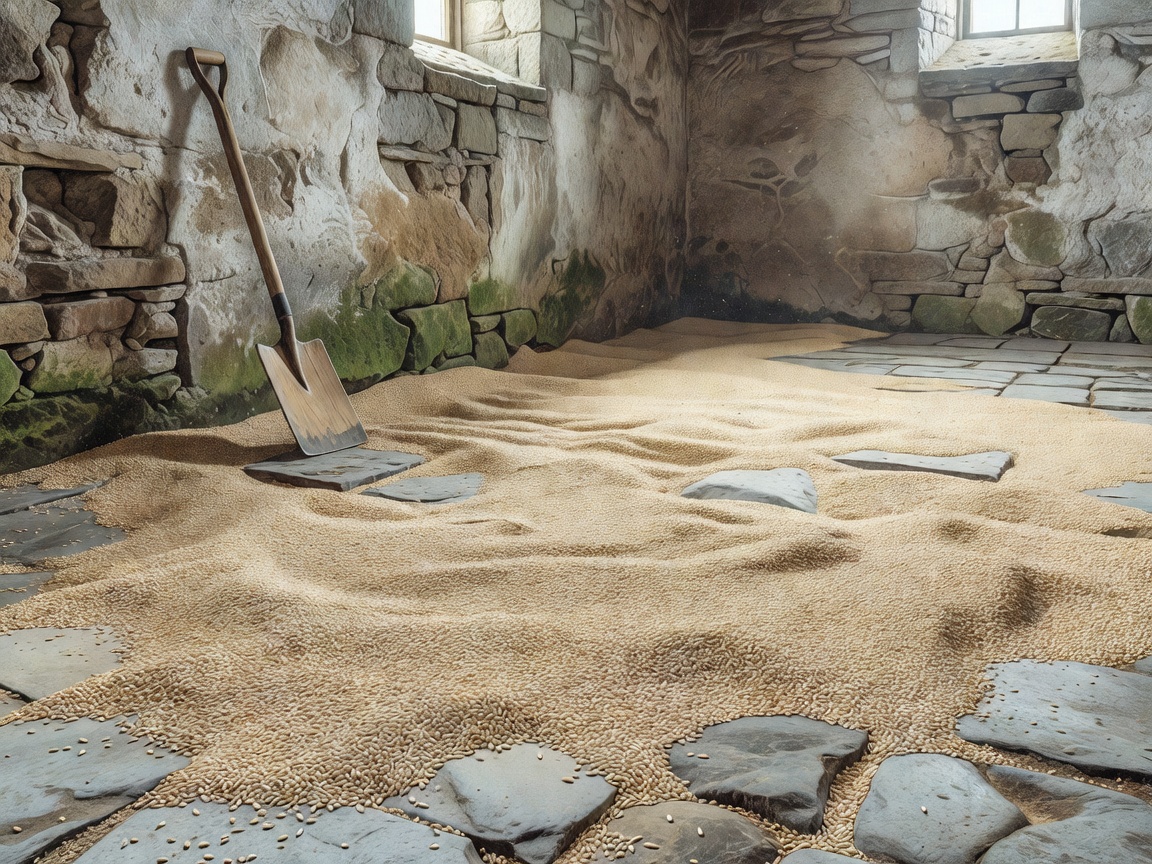
A town that was once the industry
Campbeltown sits near the foot of the Kintyre peninsula, a long drive from Glasgow and a short sail from Ireland and from the Clyde shipping lanes. In the nineteenth century that position made it one of the most concentrated distilling towns in the world, with more than thirty distilleries working at its peak and a local coal seam at Drumlemble to fire them.
The collapse came from several directions at once: over-supply, a reputation for output pushed beyond what quality could support, the loss of the American market during Prohibition, the exhaustion of the local coal, and the steady consolidation of the blending trade around the central belt. By the middle of the twentieth century the town's distilling industry had been reduced to a handful of survivors, and then to two.
The three that work now
- Springbank, owned by the family firm J&A Mitchell & Co, carries out every stage of production on site — malting, distilling, maturing and bottling. It is the distillery most often cited for doing all of its own malting on its own floors, and it produces three distinct malts: Springbank itself, distilled in a manner usually described as two and a half times; Longrow, double distilled and heavily peated; and Hazelburn, triple distilled and unpeated.
- Glen Scotia, on the other side of town, is the smaller and quieter of the two long-standing sites, with a house style that runs oilier and more coastal and a peated line alongside its unpeated core.
- Glengyle, whose whisky is sold as Kilkerran because the Glengyle name was not available for the spirit, was brought back into production by the same owners as Springbank. Its revival is closely tied to the case for Campbeltown's continued recognition as a whisky locality in its own right.
Because the sample size is three, generalisations about "the Campbeltown style" describe individual houses rather than a region. What the town's whiskies often share is a robustness that comes from traditional equipment and unhurried practice, not from anything the map is doing.
Production choices you can hear about here
Campbeltown is a useful region precisely because so much of its production is old-fashioned and openly described. Floor malting means the peating level is decided in the town rather than ordered from a maltings. Direct-fired wash stills, worm-tub condensing and on-site bottling all persist in ways that industrial sites long ago engineered away. Springbank's use of a partial third distillation sits between the Lowland triple-distilled model and the standard two-run approach, and it is the clearest illustration available that distillation count is a dial rather than a switch.
How to read a bottling
Campbeltown is also the natural place to talk about independent bottlers, because Cadenhead's — one of the oldest names in the trade — is owned by the same family firm as Springbank. An independent bottler buys casks from distilleries and releases them under its own label, often at cask strength, unchilled and uncoloured. Gordon & MacPhail in Elgin, Signatory, Douglas Laing, Hunter Laing and Berry Bros. & Rudd all operate in the same broad way.
| On the label | What it tells you | What it does not tell you |
|---|---|---|
| Distillery name | Where the spirit was made | Who selected or bottled the cask |
| Region or locality | The statutory area of the distillery | Anything about flavour |
| Age statement | The age of the youngest whisky present | The age of the oldest component |
| Single cask | One cask, so a finite and variable release | That the cask was a good one |
| Cask type | What the wood previously held | Whether it was first fill or refill, unless stated |
| Strength | The alcoholic strength in the bottle | Whether water was added before bottling |
| Natural colour | No plain caramel colouring added | Anything about cask quality |
| Non chill-filtered | Bottled without the anti-haze filtration step | That the whisky will be cloudy |
Two conventions are worth knowing. Independent bottlings sometimes withhold the distillery name and describe the whisky by region instead, usually because the selling distillery has not permitted the name to be used. And chill filtration is generally applied to whisky bottled at lower strengths to prevent haze when chilled or diluted; the industry rule of thumb is that above roughly 46% ABV haze is unlikely, which is why so many non chill-filtered bottlings appear at or above that level.
What the region is good for
If you want to understand how much of Scotch character is decided by people rather than places, three distilleries in one small town — one of them producing three different malts on the same equipment — is the most efficient case study in Scotland. The map here tells you almost nothing. The production notes tell you nearly everything.
Back to the map
Five regions, read properly
Region tells you where. Production tells you what. Cask tells you how much of the what survives. Read the three together and the label stops being decorative.